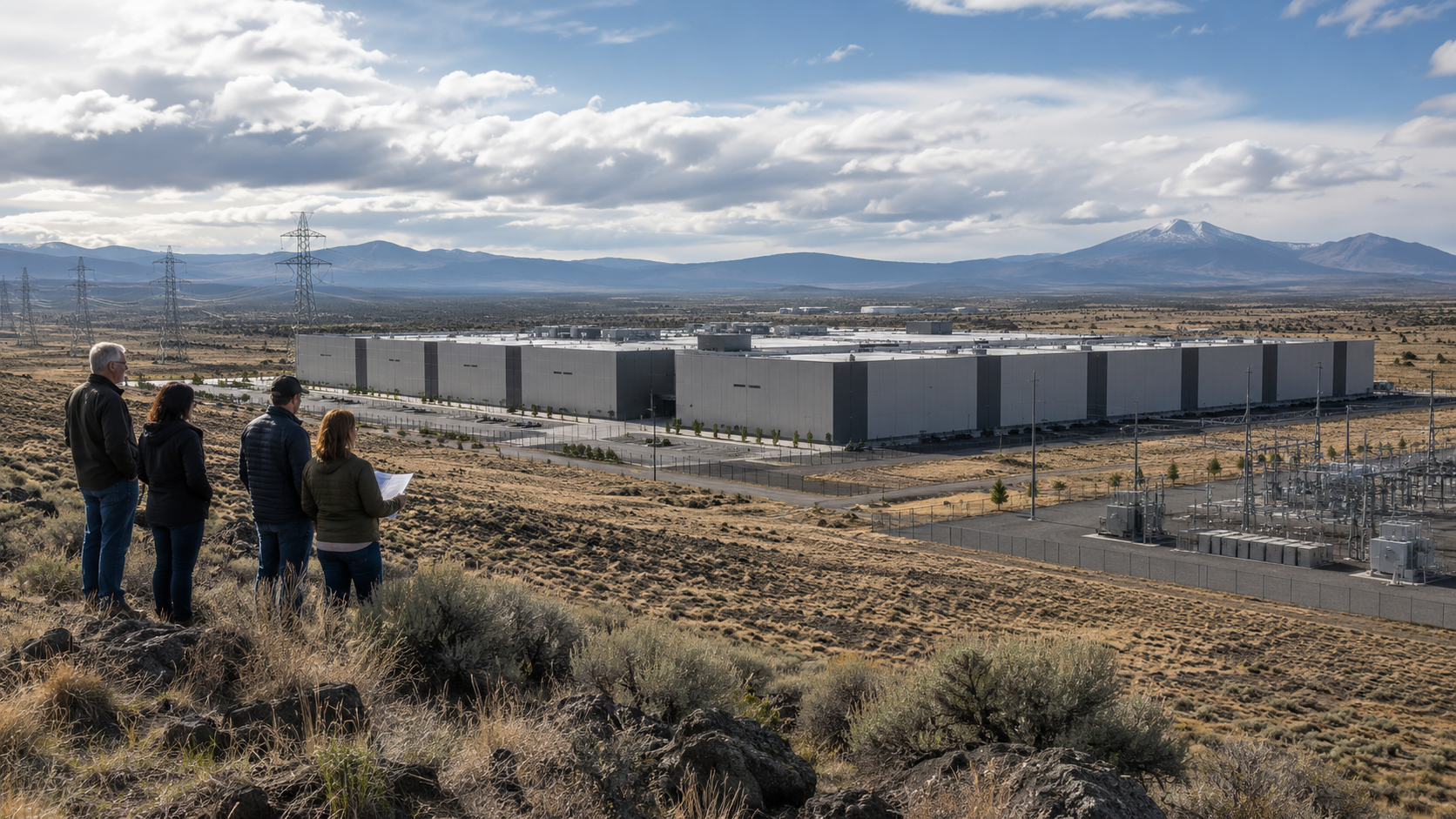
A video discussion about Oregon data centers, public costs, and local accountability.
This video discusses the rapid expansion of data centers in Oregon and the questions local communities should be asking before these projects move forward.
Data centers are often presented as economic development projects, but they also raise serious public-interest questions. They can require large amounts of electricity, water, land, infrastructure, and tax support. When those costs are spread across communities, residents deserve to understand who benefits, who pays, and what safeguards are in place.
The issue is not whether the internet, cloud services, or artificial intelligence require physical infrastructure. They do. The issue is whether Oregon communities are being asked to absorb the costs while private companies receive the long-term benefits.
Why this matters
Data centers are not just buildings. They are major infrastructure decisions. They can affect electric grids, water systems, land use, tax revenue, utility planning, climate goals, and local budgets.
Before Oregon cities and counties approve or subsidize large data center projects, residents should have clear answers about:
- How much electricity the project will require;
- Whether residential or small-business utility customers could see higher costs;
- How much water the facility will use;
- Whether the project receives tax breaks or public incentives;
- How many permanent local jobs will actually be created;
- What environmental impacts have been reviewed;
- Whether emergency services, roads, substations, or other public infrastructure will need upgrades; and
- How the public will be able to monitor compliance over time.
Communities should not have to accept vague promises in place of enforceable protections. If a project requires public resources, public infrastructure, or public subsidies, then the public deserves transparency.
A local government issue
These decisions often happen through zoning changes, utility agreements, tax exemptions, enterprise zones, development agreements, and infrastructure planning. That means city councils, county commissions, planning departments, and state lawmakers all have a role to play.
Oregon residents should be able to ask basic questions before approval, not after the project is already locked in.
Data centers may be part of the modern economy, but that does not mean every proposal deserves automatic approval. Growth should come with accountability, measurable public benefit, and protections for the communities being asked to host this infrastructure.
Watch the video here:
Data Centers: They Win, We Lose