Part 10 of the Bend Surveillance Oversight series.
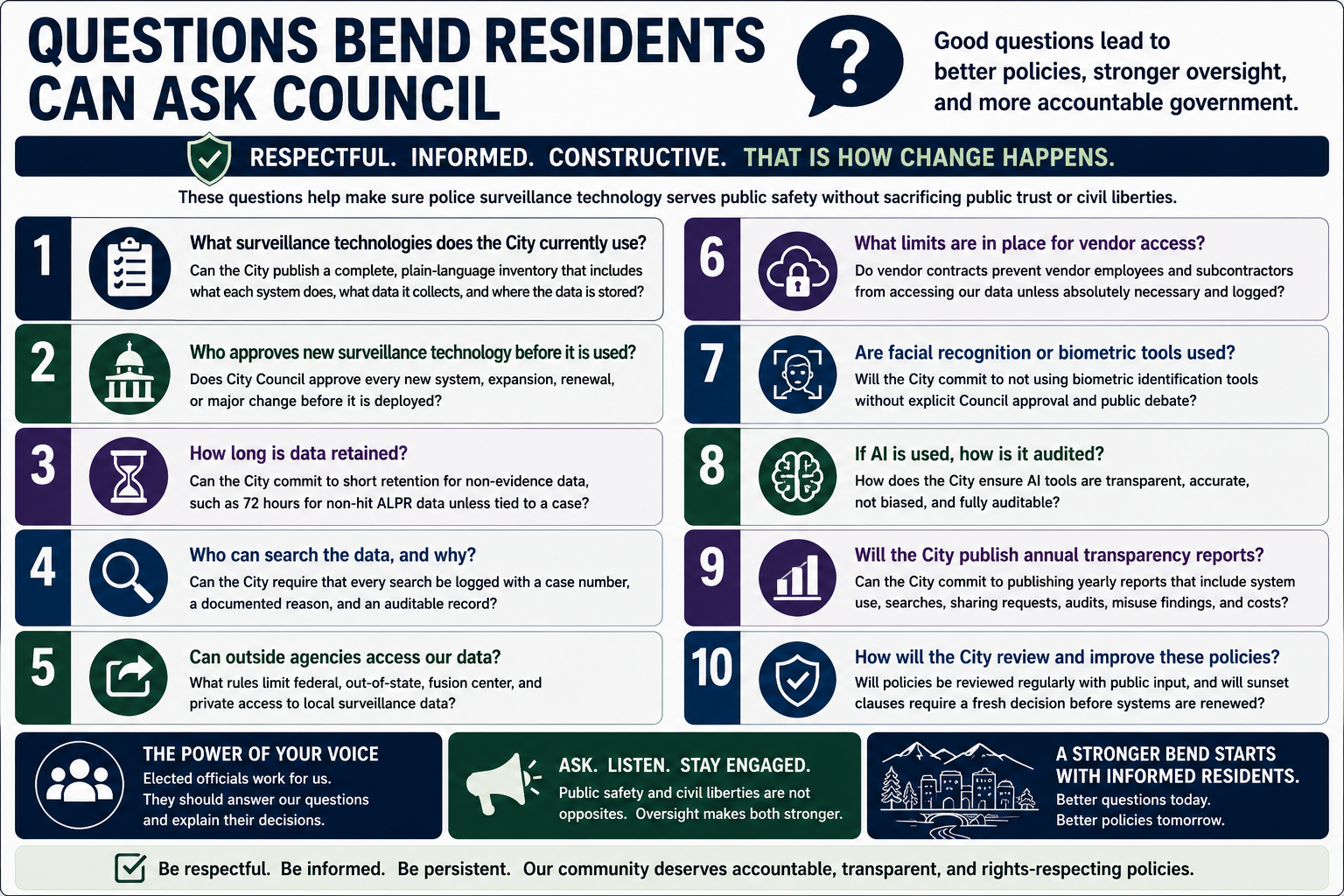
You do not need to be a surveillance expert to ask reasonable questions about public technology.
If a city uses tools that collect, store, search, analyze, or share public data, residents have a right to understand how those tools are governed.
That applies to body cameras, fleet cameras, automated license plate readers, drones, traffic enforcement cameras, digital evidence systems, AI tools, real-time information platforms, and any other technology that affects public privacy, public records, or public accountability.
The goal is not to attack City staff or police.
The goal is simple:
Public safety technology should answer to public rules.
1. What systems exist?
- What surveillance technologies does Bend Police currently use?
- What systems are being considered for future use?
- Which systems are active now?
- Which systems are approved but not yet active?
- Which systems are optional add-ons or future capabilities?
- Which vendors are involved?
- Are there third-party vendors, subcontractors, cloud providers, or software modules the public should know about?
- Is there a plain-language public inventory residents can read?
2. What data is collected?
- Does the system collect video?
- Does it collect audio?
- Does it collect license plate data?
- Does it collect location data?
- Does it collect metadata?
- Does it collect biometric data?
- Does it analyze faces, vehicles, objects, movement, behavior, or patterns?
- Is any data analyzed by AI or automated tools?
- Are any features disabled but technically available?
3. Where does the data go?
- Where is the data stored?
- Is it stored on City systems or vendor-controlled cloud systems?
- Does the City own and control the data?
- Can vendors access the data?
- Can vendors process, export, or analyze the data?
- Are cloud providers or subprocessors involved?
- Can data be stored outside Oregon?
- Can data be stored outside the United States?
- What happens to the data when the contract ends?
4. How long is the data kept?
- What is the default retention period for each system?
- Is non-evidence data automatically deleted?
- Is non-hit ALPR data deleted quickly?
- Who can extend retention?
- What justification is required to extend retention?
- Are retention changes logged?
- Are retention settings audited?
- Does the City publish retention rules publicly?
5. Who can search the data?
- Who has access to each system?
- Are users limited by role?
- Can every officer search the system?
- Can supervisors search it?
- Can dispatch search it?
- Can prosecutors access it directly?
- Can vendors access it?
- Can outside agencies access it?
- Are searches required to include a case number or incident number?
- Are searches required to include a purpose?
- Are all searches logged?
- Are search logs audited?
- What happens if someone searches improperly?
6. Can outside agencies access it?
- Can federal agencies access Bend surveillance data?
- Can out-of-state agencies access it?
- Can regional law enforcement systems access it?
- Can fusion centers access it?
- Can private companies access it?
- Can vendors respond directly to outside requests?
- Does the City require case-specific legal process before sharing?
- Does the City require written authorization before sharing?
- Does the City publish annual data-sharing statistics?
- Can the City deny outside requests?
- Can the City audit outside access?
7. Can vendors activate new features?
- Can vendors activate new AI features?
- Can vendors activate analytics features?
- Can vendors activate biometric tools?
- Can vendors activate ALPR features?
- Can vendors activate real-time monitoring?
- Can vendors change retention settings?
- Can vendors change data-sharing settings?
- Does Council approval happen before new capabilities are enabled?
- Does the public receive notice before major feature changes?
- Are disabled features independently verified?
8. What about facial recognition and biometrics?
- Does Bend use facial recognition?
- Does Bend plan to use facial recognition?
- Do any current systems have facial recognition capability?
- Are biometric features disabled?
- Who verifies that they are disabled?
- Would Council approval be required before biometric features are activated?
- Would the public receive notice?
- Would there be legal review and technical review first?
A simple local rule would be:
No facial recognition or biometric identification without explicit public approval.
9. What about AI police reports?
- Does Bend use AI-assisted police reports?
- Does Bend plan to use AI-assisted police reports?
- If AI is used, are original AI drafts preserved?
- Are officer edits logged?
- Does the final report disclose AI assistance?
- Are prosecutors notified when AI was used?
- Can defense attorneys obtain AI drafting records through normal discovery?
- Can the vendor use Bend data to train AI models?
- Has the system been independently audited?
- Are serious incidents excluded or subject to extra safeguards?
A simple local rule would be:
No AI-generated police report without an audit trail.
10. What oversight exists?
- Has the City conducted an independent technical audit?
- Does each system have a public use policy?
- Does each system have a public retention policy?
- Does each system have a public sharing policy?
- Are complaints tracked?
- Are violations reported publicly in aggregate?
- Does Council review surveillance systems before renewal?
- Does the City publish annual transparency reports?
- Are total annual costs publicly reported?
- Are future renewals and expansions clearly identified?
11. What safeguards will Bend adopt?
- Will Bend adopt a surveillance technology ordinance?
- Will Bend require Council approval before acquisition or expansion?
- Will Bend publish a public inventory of all surveillance technologies?
- Will Bend require public use policies before deployment?
- Will Bend set short retention limits?
- Will Bend require logged searches with case numbers?
- Will Bend restrict federal and third-party sharing?
- Will Bend prohibit facial recognition without explicit public approval?
- Will Bend require independent technical audits?
- Will Bend require annual public transparency reports?
- Will Bend prohibit vendors from activating new capabilities without City approval?
- Will Bend require public review before contract renewal?
A short version residents can send
Residents who want to keep it simple can ask Council this:
Before Bend expands police surveillance technology, will the City publish a plain-language inventory of all systems, identify what data each system collects, explain where the data is stored, disclose retention periods, require logged searches with case numbers, restrict federal and third-party sharing, prohibit facial recognition without explicit public approval, and require annual public transparency reports?
These are not anti-police questions.
They are public governance questions.
If a technology is powerful enough to collect, search, store, analyze, or share public data, it is powerful enough to deserve public rules.
Bend residents deserve clear answers before police surveillance systems expand.
Further reading
Series links