Part 1 of the Bend Surveillance Oversight series.
Most people hear “police cameras” and imagine a simple device: a body camera on an officer, a camera in a patrol car, or a license plate reader mounted near a road.
Cameras are a tool of modern policing, but modern policing was never just about cameras.
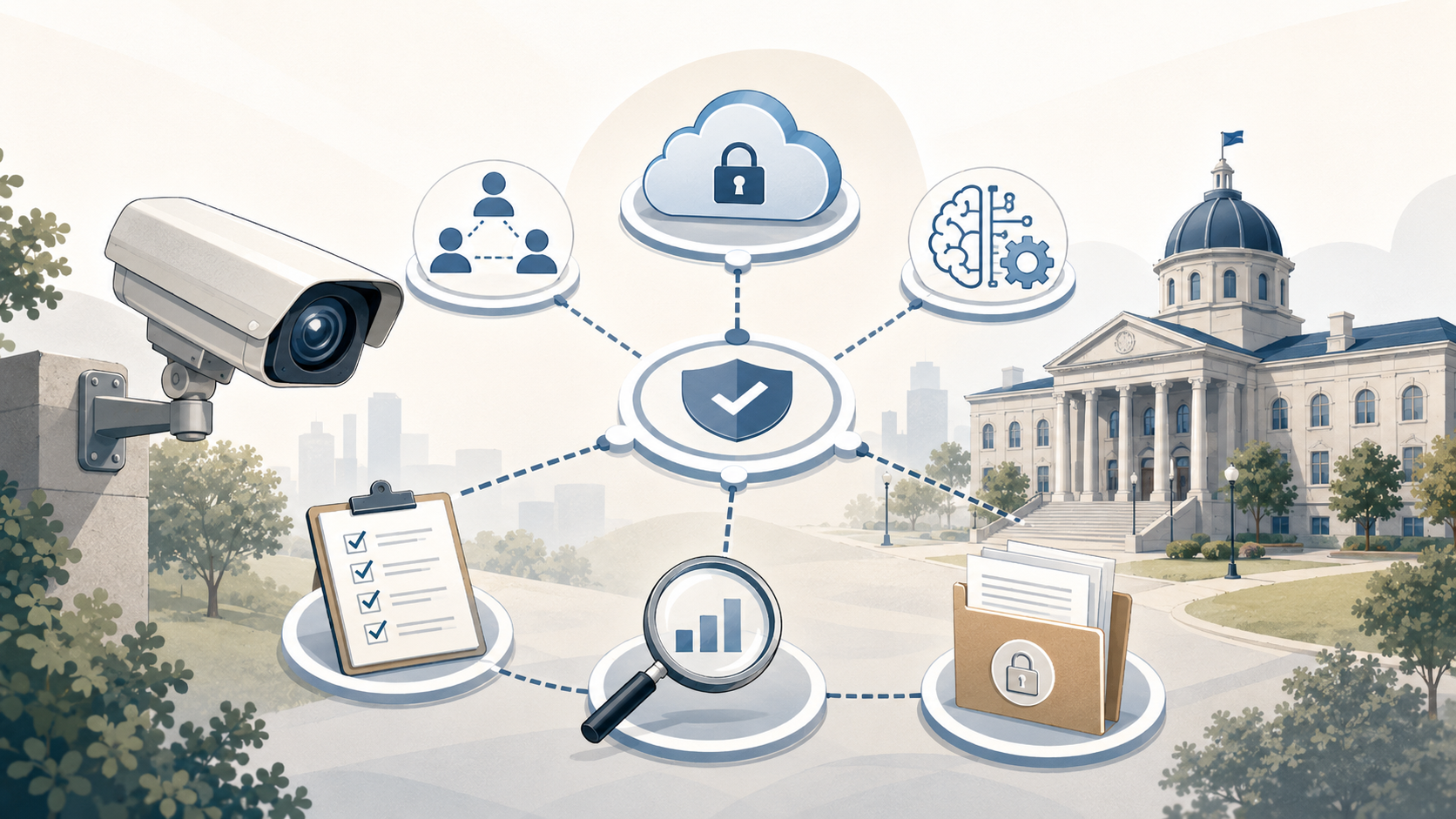
They are often part of a much larger technology ecosystem involving cloud storage, evidence management software, artificial intelligence tools, automated license plate readers, vehicle cameras, drones, real-time crime center platforms, third-party vendors, and future software features that may be added after the original purchase.
That distinction matters.
A camera records what happens in front of it. A connected surveillance system can collect data, store it, search it, analyze it, share it, and combine it with other systems. Once that happens, the public policy question changes.
The question is no longer only:
Should police have cameras?
The better question is:
What rules govern the data those cameras create?
For example:
- Where is the data stored?
- How long is it kept?
- Who can search it?
- Are searches logged?
- Can outside agencies access it?
- Can vendors access it?
- Can new AI or biometric features be activated later?
- Does the City Council have to approve expansions?
- Are residents told when capabilities change?
These are not anti-police questions.
They are basic public oversight questions.
Body cameras, patrol vehicle cameras, and evidence systems can serve legitimate public safety and accountability purposes. But when those systems are connected to vendor-controlled cloud platforms, AI tools, automated license plate readers, and broader data-sharing networks, the public deserves clear rules before the technology expands.
This is especially important because cities often start with one tool and later add more tools from the same vendor.
A city may begin with body cameras, then add fleet cameras, then cloud evidence storage, then license plate readers, then drones, then AI report-writing tools, then real-time crime center software.
Each step may be presented as a small upgrade.
But together, those upgrades can create a powerful surveillance infrastructure.
That is why the issue is not just the camera.
It is the ecosystem.
Bend residents should not have to dig through dense procurement packets, legal agreements, and technical appendices to understand what surveillance tools are being used or considered.
The City should provide a plain-language public inventory of police technology systems, including hardware, software, cloud storage, AI tools, third-party vendors, data retention rules, data-sharing rules, audit procedures, and any future capabilities that can be activated through software.
This does not require the City to abandon useful technology.
It simply requires public oversight to keep pace with the technology being purchased.
Before Bend expands police surveillance systems, residents should be able to answer a simple question:
Are these tools governed by clear public rules, or are we relying mostly on vendor assurances and internal department policies?
That is the conversation Bend should have now, before the system becomes larger, more expensive, and harder to change.
Further reading
- EFF: Beware the Bundle
- Axon AI Ethics Board: Facial Recognition Report
- Axon AI Ethics Board: ALPR Report
- Congressional Research Service: Facial Recognition Technology and Law Enforcement