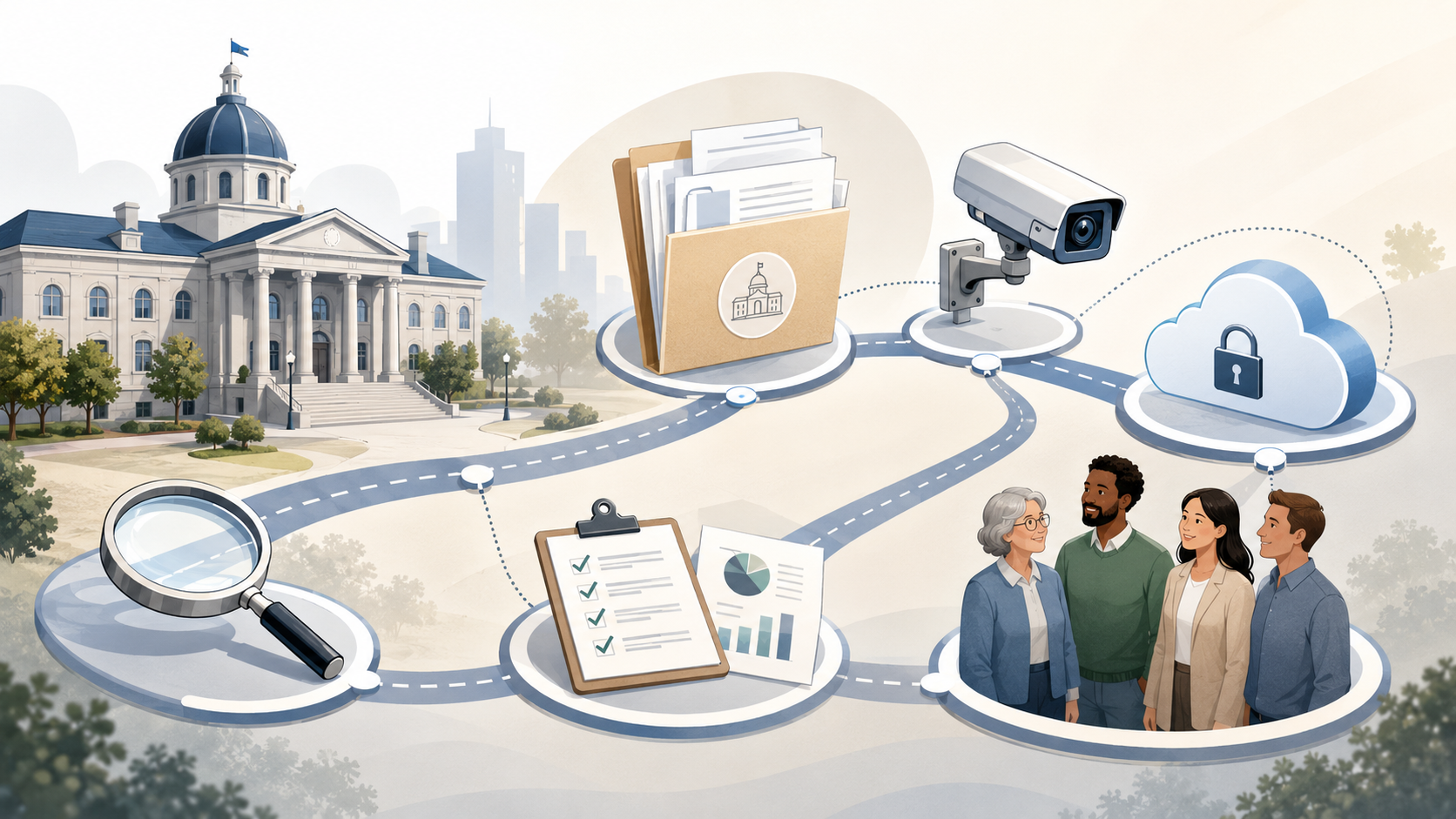
A public guide to Bend police technology, data retention, vendor access, ALPRs, AI report-writing, sharing limits, audits, and oversight.
Modern police technology is no longer just about cameras.
Body cameras, fleet cameras, license plate readers, drones, traffic enforcement cameras, digital evidence systems, AI tools, and real-time information platforms can all become part of a larger data system.
That does not mean every tool is bad.
It does mean the public deserves clear rules before these systems expand.
The basic questions are simple:
- Where does the data go?
- How long is it kept?
- Who can search it?
- Can outside agencies access it?
- Can vendors access it?
- Can new features be activated later?
- Are searches logged?
- Are systems independently audited?
- Does the public receive annual reports?
- Does Council approve major expansions before they happen?
This public education series was created to help Bend residents understand those questions.
The goal is not to oppose public safety.
The goal is to make sure public safety technology answers to public rules.
Sources for this series are collected in the Bend Surveillance Oversight Source Library.
Start here: the full series
The full Bend Surveillance Oversight series is now available.
This Is Not Just About Cameras
What Police Technology Has Bend Already Considered or Purchased?
Why Vendor Lock-In Matters in Police Technology Contracts
AI Police Reports and the Audit Problem
ALPRs: License Plate Scans Are Location Records
Why Federal and Third-Party Sharing Matters
Other Cities Are Already Asking Better Questions
What Reasonable Safeguards Would Look Like in Bend
Questions Bend Residents Can Ask Council
The basic safeguards Bend should consider
Bend can support public safety while still requiring public oversight. Those goals belong together.
A reasonable local framework would include:
- A plain-language public inventory of all police surveillance technologies.
- Council approval before new surveillance tools or major expansions.
- Public use policies before deployment.
- Short retention periods for non-evidence data.
- Logged searches with officer name, case number, purpose, and timestamp.
- Limits on federal, out-of-state, private-company, fusion center, and vendor access.
- No facial recognition or biometric identification without explicit public approval.
- No AI-generated police reports without preserved drafts and edit logs.
- Independent technical audits.
- Annual public transparency reports.
- Contract terms preventing vendors from changing settings or activating new capabilities without City approval.
- Public review before contract renewals.
These are not radical ideas.
They are basic safeguards for powerful technology.
A short question residents can ask Council
Before Bend expands police surveillance technology, will the City publish a plain-language inventory of all systems, identify what data each system collects, explain where the data is stored, disclose retention periods, require logged searches with case numbers, restrict federal and third-party sharing, prohibit facial recognition without explicit public approval, and require annual public transparency reports?
These are not anti-police questions.
They are public governance questions.
If a technology is powerful enough to collect, search, store, analyze, or share public data, it is powerful enough to deserve public rules.
Why this matters now
Police technology often expands in pieces.
One contract may cover body cameras. Another may cover fleet cameras. Another may involve drone software, traffic enforcement cameras, real-time information tools, AI-assisted reports, cloud storage, or video evidence systems.
Each individual purchase may sound narrow. But together, these tools can create a much larger public safety data ecosystem.
That is why oversight should not wait until after a controversy.
Bend residents should be able to understand what systems exist, what data they collect, how the data is used, who can access it, and what rules prevent misuse.
Public safety technology should not become a black box.
The basic principle
Bend can support public safety and still require transparency, accountability, and democratic oversight.
Those goals are not opposites.
They belong together.
If a public technology system collects, stores, searches, analyzes, or shares public data, it should answer to public rules.
Sources and supporting documents
The public source page for this series is available here: